nice design. a few typing errors in this edition (so far in two books, I found 2) but it is ok. I pay for the story and I am very satisfied.

The Witcher Boxed Set: The Last Wish, Sword of Destiny, Blood of Elves, Time of Contempt, Baptism of Fire, The Tower of The Swallow, The Lady of the Lake, Season of Storms
Hersteller:
Gollancz
· MPN: 1030147
Günstigster Preis
73,68 €
inkl. MwSt.
Bei 1 Anbieter im Vergleich
Zuletzt aktualisiert: 12.05.2026 19:39 Uhr
Produktfakten auf einen Blick
- Hersteller
- Gollancz
- EAN
- 9781473232273
- Hersteller-Artikelnr.
- 1030147
- Kategorie
- Fantasy Action & Abenteuer
- Durchschnittsbewertung
- 4,3 / 5 (3 Bewertungen)
- Günstigster Preis
- 73,68 € (averdo DE)
- Anbieter im Vergleich
- 1 Shops
Produktbeschreibung
Perfect For Bibliophile This Boxed Set Contains All Eight Books: The Last Wish, Sword Of Destiny, Blood Of Elves, Time Of Contempt, Baptism Of Fire, The Tower Of The Swallow, The Lady Of The Lake, Season Of Storms.
Bewertungen & Erfahrungen
Verteilung basiert auf 3 vorliegenden Einzelbewertungen.
Wir bündeln Bewertungen aus verschiedenen Quellen und geprüfte Nutzerbewertungen von testmonster.de, um dir ein ehrliches Gesamtbild zu geben.
What stands out about the series, what makes it memorable? Without going too deep into describing the setting, I’ll get to it though, there are two things about the series and how it’s written that stand out to me, and those are the great characterisation, and the immersive worldbuilding. The phrase “naturalistic chaos” is, I think, an apt descriptor for what to generally expect. Sapkowski knows his world, and knows the kinds of manifestations that can emerge within it. As readers, we aren’t given much lead-in, we just see the events as they happen, and because they happen consistently enough, we can piece together what we should expect. You get some curve balls every now and then, which end up being either clues to something new, most of the time, or dropped, never to be heard from again, but this style works more often than it doesn’t.Because the setting is well-developed, and portrayed in an engaging manner, you latch on to the people in the world. Their surprise is yours as well, as is their anger or uncertainty, or fear, or joy. And they react upon these feelings in natural, believable ways. Their reactions and the ways they carry themselves build upon each other, you get to know them like you’d get to know people irl, and it is that level of authenticity that builds your connection to them.However, because of this quite intimate and personal storytelling style, there is a strange tension when it comes to portraying the larger scope of the saga, the continent-spanning war. You can only tell so much about something this broad by looking through such a narrow window as the perspectives of singular non-combatants. You can’t shake the feeling, the sensation, the impression, that something more meaningful is happening just beyond the horizon. To some extent, that is deliberate, the story wants to tell you that war is bad or it wants to move on multiple fronts at once, but in doing so it ignores and muddles the conflicts and storylines we actually went into this series to pursue, and Sapkowski doesn’t always handle that dichotomy particularly well. It is quite fitting that the best books in the series either ignored the war almost entirely (The Tower Of The Swallow) or dove right into it with the exact same level of care and attention as the other storylines received (The Lady Of The Lake).Speaking of larger scope, I have to applaud the setting itself. It for the most part has the trappings of late medieval Europe, but with plenty of details altered. Not just when it comes to magic, but also monsters. There are substantial efforts made in classifying and cataloguing them and their lifestyles. Preferred food and environments, physiology, abilities, hunting methods. Geralt, the main protagonist of the series is more craftsman than killer, and his craft, and the way it develops, is very well-defined. Similar levels of care and complexity also come up in many other aspects of the world, such as how prejudice develops and manifests, how money is being transferred and used, how laws change and why, and what the consequences thereof are. This also includes aspects you’d think are redundant, given magic exists in the setting, but there are reasons given as to why magic isn’t used as extensively as you’d think.Magic itself and its users are one of the most interesting aspects of the world. The magic system itself is extensive, but low-key. Magic mostly manifests as potions, enchantments, illusions and conjuring, and while they can be complex or long-reaching, the actual extent of magic use is limited partly due to the amount of training required to use magic effectively, partly because mages draw upon a limited supply of magical energy. Magic users themselves are portrayed as a newly-emergent corporate class, people who through their background and education have important and far-reaching knowledge and connections. They are somewhat insular when it comes to dealing with commoners, and function as highly-trained professionals, such as medics or royal advisors. There is a lot of variance between mages as far as personality and motivation is concerned, but one thing they have in common is that their status allows them more freedom than even royalty in some cases. They are rich, can go anywhere at any time, and because they wield so much power, only other mages can seriously threaten them, they don’t have to concern themselves too much with the kind of entourage they bring around themselves, including sexually.These books are surprisingly horny. Or maybe it’s just the characters we follow, of which pretty much every sexually active character has multiple partners or potential partners over the run of the series. I don’t think any characters are poly, but jealousy is pretty rare regardless, everyone just sees sexuality as a “go ahead and do your thing” kind of deal. The notable absence of wide-spread religious organisations contributes to that too, I imagine. It might not be authentic to medieval Europe, but it is authentic to the world of The Witcher.I could go on and on from now on about a whole bunch of other topics, like how the quotes from both irl and in-universe sources from before chapters enhance the experience and prime the reader’s expectations, or the moral weight and significance of every decision surrounding the main characters, or how prosodic and teeming with character information the dialogue is, but I have to draw a line at some point, and that line reads: Go out there and find, read, and enjoy this series. While it shows its age at various points, the way the world is built and presented, and the manner by which the stories flow through it is still as impactful and engaging as it has ever been.
Die Bücher find ich sehr gut, sind im bundle auch viel günstiger als einzeln. Ärgerlich ist das auf den eigentlich schönen Covern dick und fett steht das es jetzt eine Netflix serie gibt. Hab zuerst gedacht es wären nur Sticker ist aber leider aufgedruckt.
Preisvergleich
1 Angebot gefunden
* Alle Preise inkl. MwSt., ggf. zzgl. Versandkosten. Preise und Verfügbarkeit können sich seit der letzten Aktualisierung geändert haben. Beim Klick auf „Zum Angebot" oder „Zum Shop" verlässt du testmonster.de und wirst zum jeweiligen Händler weitergeleitet. testmonster.de erhält ggf. eine Provision — für dich entstehen keine Mehrkosten. Letzte Aktualisierung: 12.05.2026 19:39 Uhr.
Weitere Produkte von Gollancz
Alle Produkte → 
Eric: Discworld: The Unseen University Collection
Gollancz
ab 16,69 €
inkl. MwSt.
1 Anbieter im Vergleich

The Gospel of Loki (Runes Novels) (English Edition)
Gollancz
ab 12,80 €
inkl. MwSt.
1 Anbieter im Vergleich

Guards! Guards!: Discworld: The City Watch Collection
Gollancz
ab 16,69 €
inkl. MwSt.
1 Anbieter im Vergleich

Neuromancer: The groundbreaking cyberpunk thriller (S.F. MAS
Gollancz
ab 13,15 €
inkl. MwSt.
1 Anbieter im Vergleich

The Name of the Wind: 10th Anniversary Hardback Edition (Kin
Gollancz
ab 20,22 €
inkl. MwSt.
1 Anbieter im Vergleich
Weitere Produkte in „Fantasy Action & Abenteuer"
Alle in Kategorie → 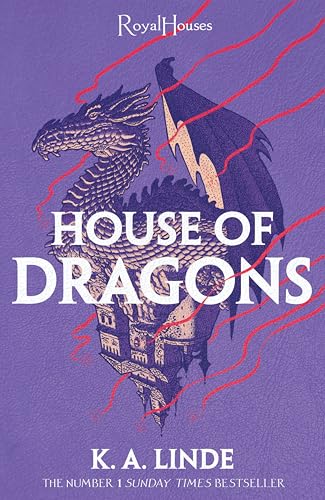
House of Dragons: From the number one Sunday Times bestselli
Macmillan
ab 16,69 €
inkl. MwSt.
1 Anbieter im Vergleich

Arcana Academy: the spellbinding #1 Sunday Times bestselling
Hodderscape
ab 17,75 €
inkl. MwSt.
1 Anbieter im Vergleich

Daughter of No Worlds: From the Sunday Times bestselling aut
Macmillan
ab 17,75 €
inkl. MwSt.
1 Anbieter im Vergleich

The Dark is Descending: The THRILLING conclusion to the Nyte
Wildfire
ab 18,45 €
inkl. MwSt.
1 Anbieter im Vergleich

Edgedancer: From The Stormlight Archive
Tor Books
ab 14,92 €
inkl. MwSt.
1 Anbieter im Vergleich