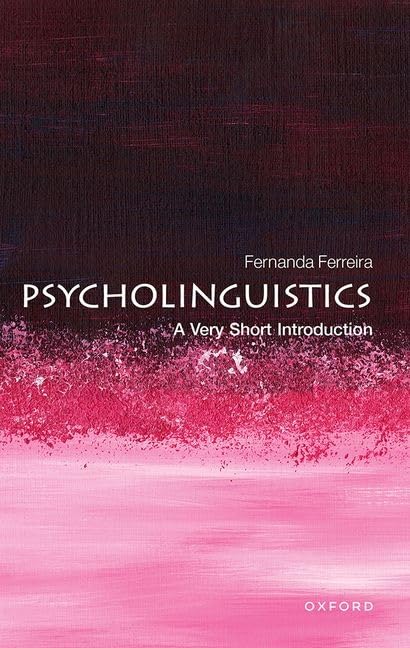
Bildquelle: medimops.de
Preisverlauf (90 Tage)
Tiefstpreis: 11,98 €
Trend
Stabile Preise
Der Trend beruht auf den letzten 14 Tagen des Preisverlaufs und ist
keine Vorhersage. Gezeigt wird je Tag der niedrigste Preis aller bei uns
gelisteten Shops — Angebote, die wir nicht erfassen, sind nicht enthalten.
Browser-Benachrichtigung bei PreissenkungWir melden uns, sobald es günstiger wird als heute (11,98 €) — höchstens einmal am Tag. Ohne E-Mail, ohne Konto, jederzeit abbestellbar. Amazon-Angebote sind ausgenommen. Datenschutz
Hinweis: Amazon-Preise sind in der Preisverfolgung bzw. im
Preisverlaufsgraphen nicht enthalten. Wir versenden keine
Benachrichtigungen zu Produkten über Amazon.
Psycholinguistics: A Very Short Introduction (Very Short Introductions)
Hersteller:
Ferreira, Fernanda
· MPN: 10409379
Günstigster Preis
11,98 €
inkl. MwSt.
Bei 2 Anbietern im Vergleich
Zuletzt aktualisiert: 29.09.2026 18:17 Uhr
Produktfakten auf einen Blick
- Hersteller
- Ferreira, Fernanda
- EAN
- 9780192886774
- Hersteller-Artikelnr.
- 10409379
- Günstigster Preis
- 11,98 € (averdo.com)
- Anbieter im Vergleich
- 2 Shops
Produktbeschreibung
Very Short Introductions: Brilliant, Sharp, Inspiring This Very Short Introduction to psycholinguistics is an accessible and engaging description of how people use language. Talking and understanding language probably seem like simple and straightforward skills, but research in psycholinguistics has shown that complex computations take place behind the scenes when you communicate with others. Recent debates concerning how AI tools such as ChatGPT work highlight some of these core questions about the language faculty and how it is that humans comprehend, produce, and learn language. The boo
Bewertungen & Erfahrungen
Für dieses Produkt liegen noch keine Bewertungen vor. Sei der oder die Erste!
Noch keine Erfahrungsberichte vorhanden.
Teile deine Erfahrung und hilf anderen bei der Kaufentscheidung.
Preisvergleich
2 Angebote gefunden
* Alle Preise inkl. MwSt., ggf. zzgl. Versandkosten. Preise und Verfügbarkeit können sich seit der letzten Aktualisierung geändert haben. Beim Klick auf „Zum Angebot" oder „Zum Shop" verlässt du testmonster.de und wirst zum jeweiligen Händler weitergeleitet. testmonster.de erhält ggf. eine Provision — für dich entstehen keine Mehrkosten. Letzte Aktualisierung: 29.09.2026 18:17 Uhr.