Bildquelle: medimops.de
Preisverlauf (90 Tage)
Tiefstpreis: 154,94 €
Trend
Stabile Preise
Der Trend beruht auf den letzten 14 Tagen des Preisverlaufs und ist
keine Vorhersage. Gezeigt wird je Tag der niedrigste Preis aller bei uns
gelisteten Shops — Angebote, die wir nicht erfassen, sind nicht enthalten.
Browser-Benachrichtigung bei PreissenkungWir melden uns, sobald es günstiger wird als heute (154,94 €) — höchstens einmal am Tag. Ohne E-Mail, ohne Konto, jederzeit abbestellbar. Amazon-Angebote sind ausgenommen. Datenschutz
Hinweis: Amazon-Preise sind in der Preisverfolgung bzw. im
Preisverlaufsgraphen nicht enthalten. Wir versenden keine
Benachrichtigungen zu Produkten über Amazon.
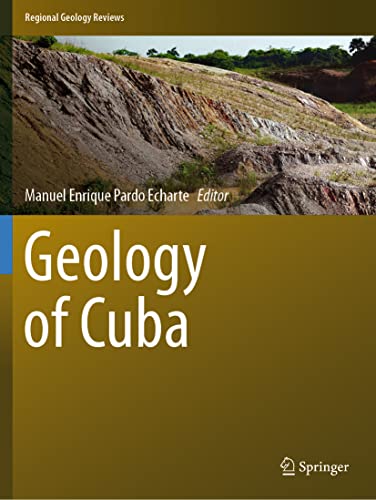
Geology of Cuba (Regional Geology Reviews)
Hersteller:
Pardo Echarte, Manuel Enrique
· MPN: M03030678008
Günstigster Preis
154,94 €
inkl. MwSt.
Bei 2 Anbietern im Vergleich
Zuletzt aktualisiert: 17.10.2026 18:18 Uhr
Produktfakten auf einen Blick
- Hersteller
- Pardo Echarte, Manuel Enrique
- EAN
- 9783030678005
- Hersteller-Artikelnr.
- M03030678008
- Kategorie
- Bücher
- Günstigster Preis
- 154,94 € (medimops.de)
- Anbieter im Vergleich
- 2 Shops
Produktbeschreibung
The evolution of geological cartography in Cuba in its more than 135 years of history has been possible through the consultation of numerous archival reports, publications, maps and personal interviews with different authors and geologists of vast experience. A brief critical analysis is made of the increase in the degree of geological knowledge of the country since the elaboration of the Geological Sketch of the Cuban Island at a scale of 1: 2 000 000 (Fernández de Castro, 1883), first of Cuba and of Ibero-America, until the most recent Digital Geological Map of Cuba at scale 1: 100 000 (Pére
Bewertungen & Erfahrungen
Für dieses Produkt liegen noch keine Bewertungen vor. Sei der oder die Erste!
Noch keine Erfahrungsberichte vorhanden.
Teile deine Erfahrung und hilf anderen bei der Kaufentscheidung.
Preisvergleich
2 Angebote gefunden
* Alle Preise inkl. MwSt., ggf. zzgl. Versandkosten. Preise und Verfügbarkeit können sich seit der letzten Aktualisierung geändert haben. Beim Klick auf „Zum Angebot" oder „Zum Shop" verlässt du testmonster.de und wirst zum jeweiligen Händler weitergeleitet. testmonster.de erhält ggf. eine Provision — für dich entstehen keine Mehrkosten. Letzte Aktualisierung: 17.10.2026 18:18 Uhr.
Weitere Produkte von Pardo Echarte, Manuel Enrique

SpringerBriefs in Earth System Sciences Non-seismic and No
Pardo Echarte, Manuel Enrique
ab 53,49 €
inkl. MwSt.
1 Anbieter im Vergleich
Geology of Cuba (Regional Geology Reviews)
Pardo Echarte, Manuel Enrique
ab 181,89 €
inkl. MwSt.
1 Anbieter im Vergleich

Oil and Gas Exploration in Cuba: Geological-Structural Carto
Pardo Echarte, Manuel Enrique
ab 53,49 €
inkl. MwSt.
1 Anbieter im Vergleich

Geological-Structural Mapping and Favorable Sectors for Oil
Pardo Echarte, Manuel Enrique
ab 52,94 €
inkl. MwSt.
1 Anbieter im Vergleich
Weitere Produkte in „Bücher“
Alle in Kategorie → 
Akku Duracell DR9945 1020 mAh 7,4 V Lithium-Ion für Kamera
Duracell
ab 24,88 €
inkl. MwSt.
2 Anbieter im Vergleich

10 x Rhodia Notizblock Rhodia Nr. 13 A6 liniert 80 Blatt ora
Rhodia
ab 29,89 €
inkl. MwSt.
1 Anbieter im Vergleich

Clairefontaine 73306C Heft (DIN A4, 21 x 29,7 cm, gebund Age
Clairefontaine
ab 28,74 €
inkl. MwSt.
1 Anbieter im Vergleich

Tasse ABYSTYLE Pokémon Pikachu Keramik 0,32 L Schwarz Multif
Abystyle
ab 17,83 €
inkl. MwSt.
2 Anbieter im Vergleich

Der kleine Rabe Socke - Meine große Hörspielbox 1 (Der klein
Silberfisch
ab 14,47 €
inkl. MwSt.
2 Anbieter im Vergleich